

The management of a restaurant, a
catering service, or any professional culinary activity (hotel for example) can be complicated and
expensive. In order to keep your business on track and improve your chances of success, you must be
careful to make regular and accurate calculations of your costs and expenses.
If you want to achieve your goal of
saving money, stop the waste and food losses, and stick to your budget while providing healthy and
balanced food to satisfy your customers, recipe cost calculation is essential.
Knowing the price per serving of your
meal allows you to set the minimum price at which you want to sell your dish and make a decent profit.
You must continually think about the preferences of your customers to position yourself properly in the
target market of your restaurant or establishment.
With these common sense tips, you will
have some elements to manage your food cost in a recipe, the cost of a unit portion, and how to exploit
that data.
How calculate the recipe cost ?
Option 1: manual calculation (on paper or excel sheet)
-
Create a list of ingredients with the quantities required to make your recipe from your shopping.
- Write prices for the quantities of ingredients purchased per unit or volume/ weight as sold or delivered to you.

- Calculate for each
item the portion used in the recipe using a specific kitchen scale
preferably.
For products purchased in containers use informative and nutritional labels to know the quantities or portion if necessary.
For fruit or vegetables in bag or fillet, an average weight per unit can be used the weight of fruit can vary significantly but again the precise weighing to create your recipe professional form is the best choice. There is sometimes a small percentage of loss on some ingredients.
For condiments or aromatic herbs, the use of a kitchen scale is essential (one can also take a fixed cost average to simplify).

- Next, calculate the total cost by adding the costs for each ingredient in the recipe and
then divide by the number of servings
produced by the recipe.
You then have the cost of a portion served.
No more complicated but still expensive in time, especially since it is necessary to regularly adjust these prices according to the variations of the prices from your suppliers.
It is also necessary to regularly reevaluate the margin on the price of your recipes, to remain in your cost prices and your criteria of profitability.
In the end, it is necessary to plan a significant amount of time on this activity, which means a salary cost.
For demanding or professional users who need to save time and productivity, you may prefer to use a convenient and more effective online tool. It allows for more tasks in a dynamic and automated way.
Option 2: Use an online tool (example with Ratatool but there are others :))
Starting from your ingredients list directly from your supplier order or simply from your shopping ticket:

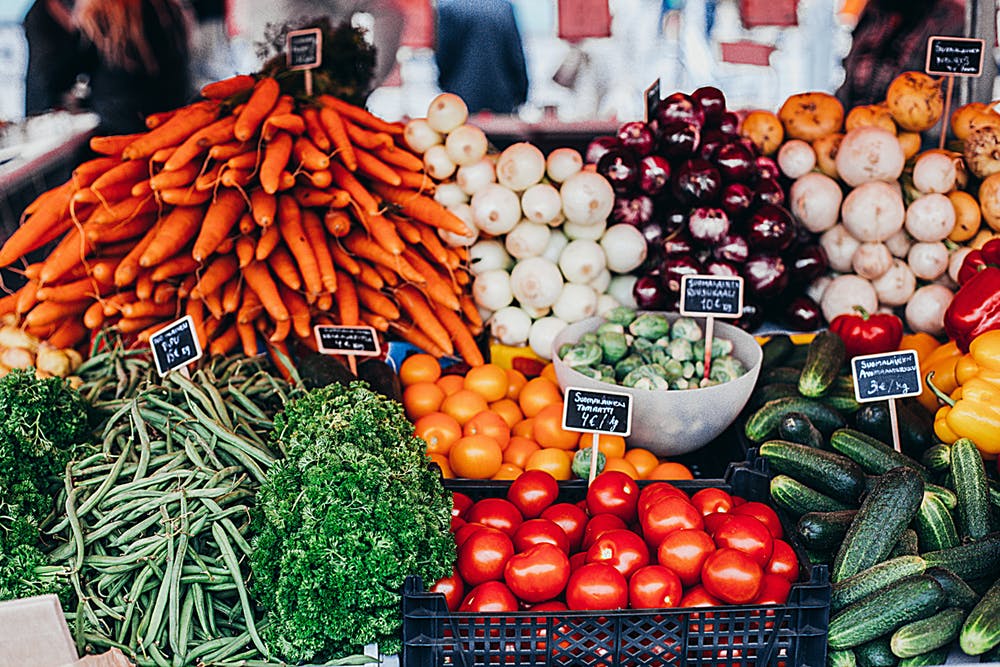
Example extract from a fruit/vegetable supplier shopping list
- List each ingredient or item by its purchase price. Associate the quantity of purchase according to its type: a volume (liter, ml) for a liquid, a weight for a solid (kilo, gram, milligram), or a number of units.
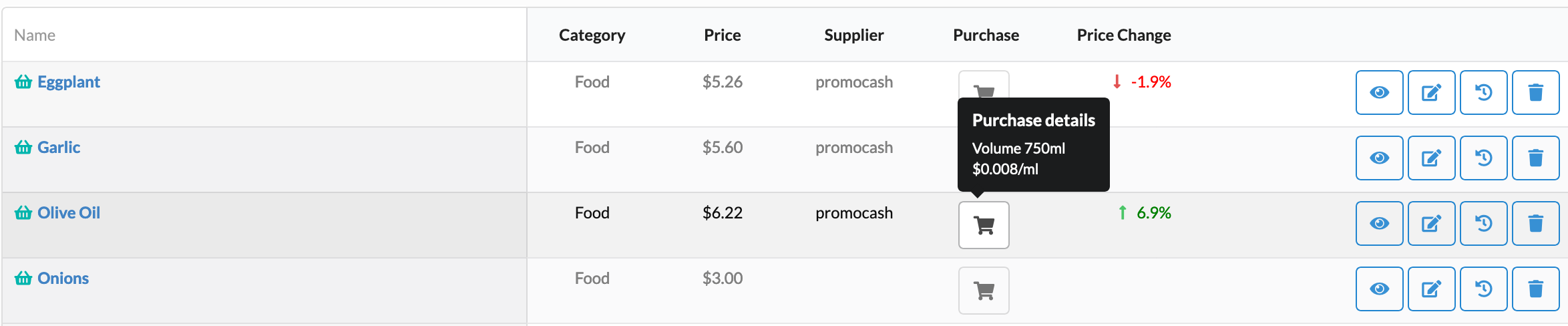
Extract of the list of ingredients in Ratatool dashboard
- Associate a supplier with all necessary details (contacts, address, emails, unique reference code ...)
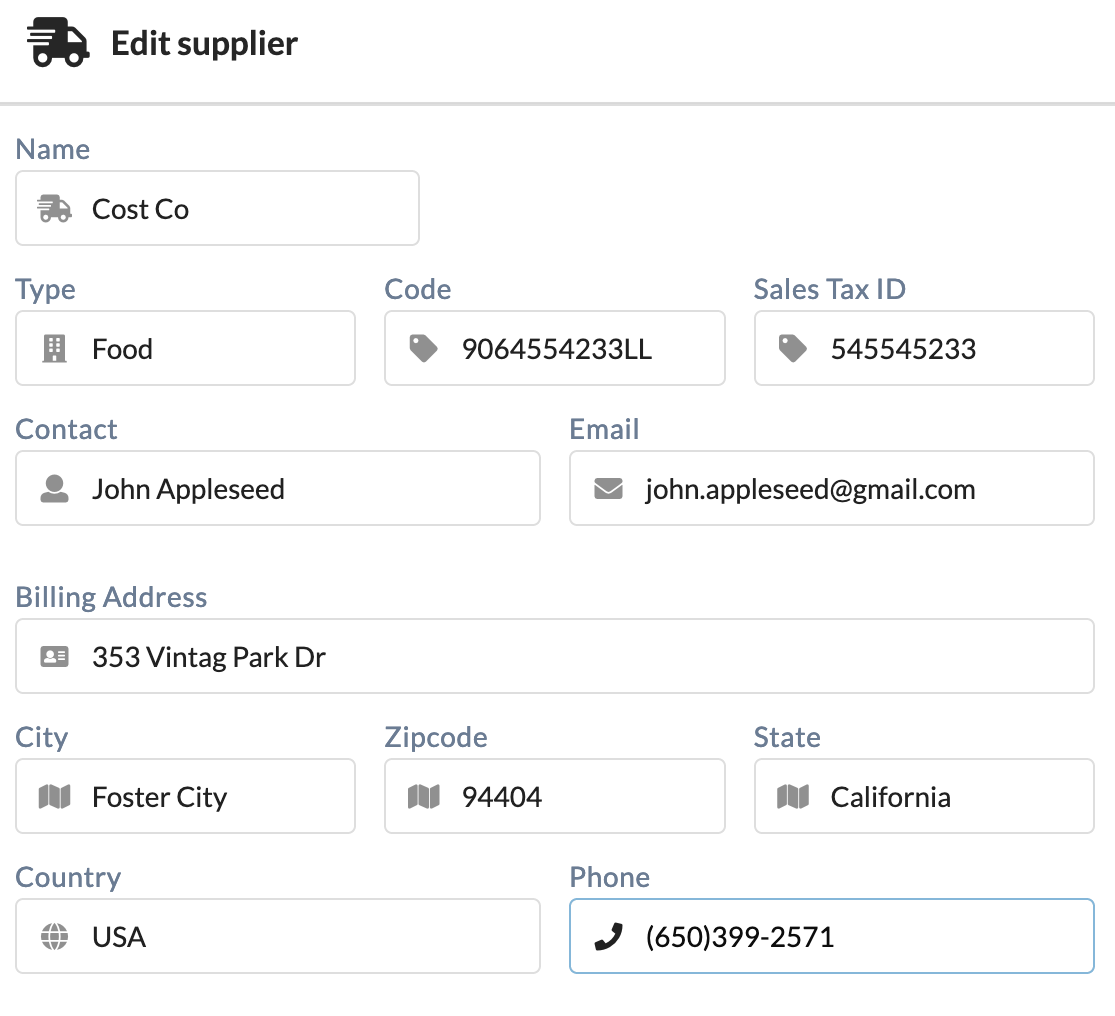
Supplier
details
in your
dashboard
- Associate a category for classification purposes : food, packaging or other.
- You can add a technical note (additional information or product description) and optionally add your nutrition tag from an official ingredients database. (USDA data)
- You have the possibilty to apply loss/gain cooking ratios to be very accurate.
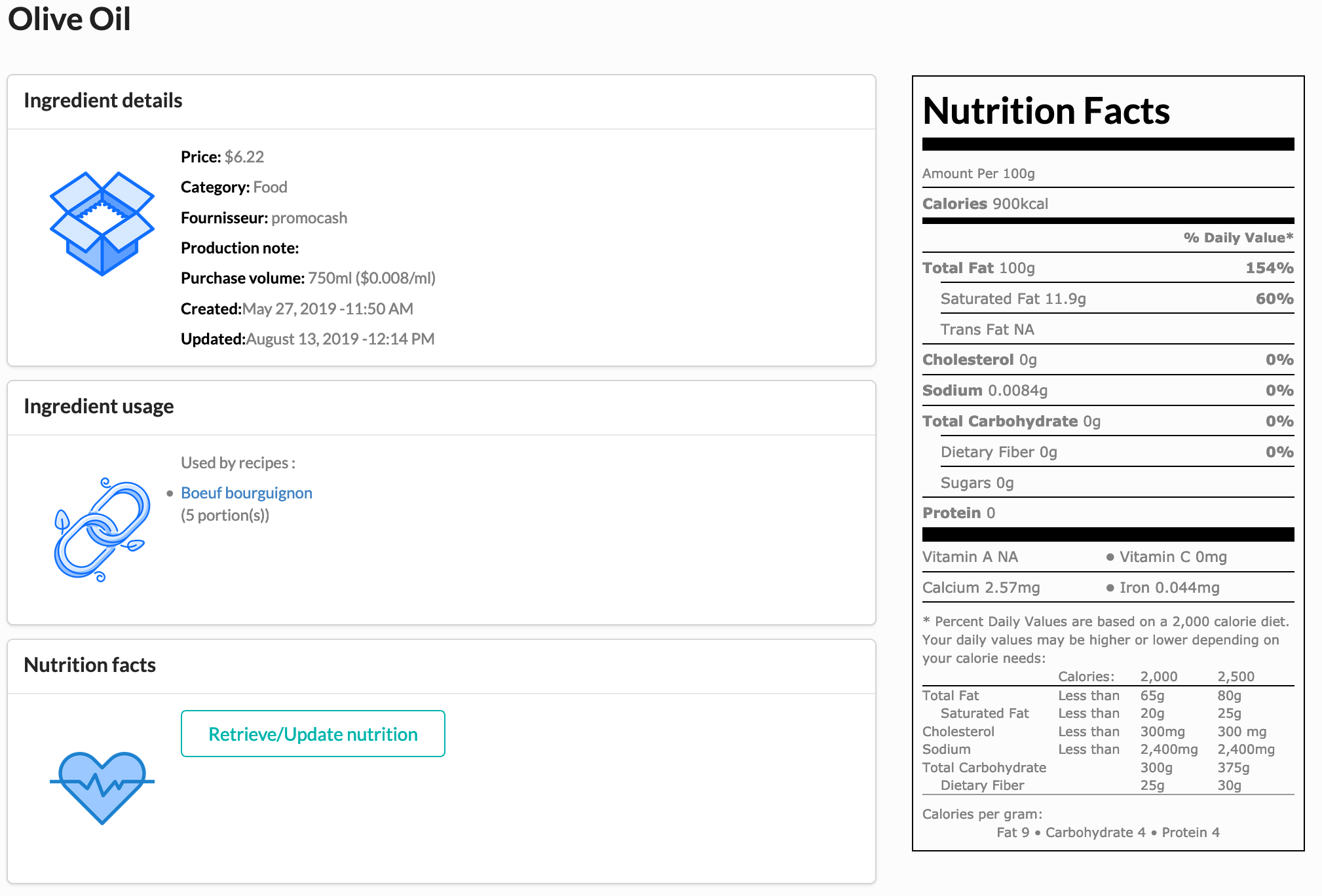
Ingredient
details
in
Ratatool
dashboard
(includes
nutrition
tags)
-
Then create your recipe by adding each ingredient with the exact quantities. (example below)
With the Ratatool platform you can also create a recipe based on a sub-recipe (a sauce for example)
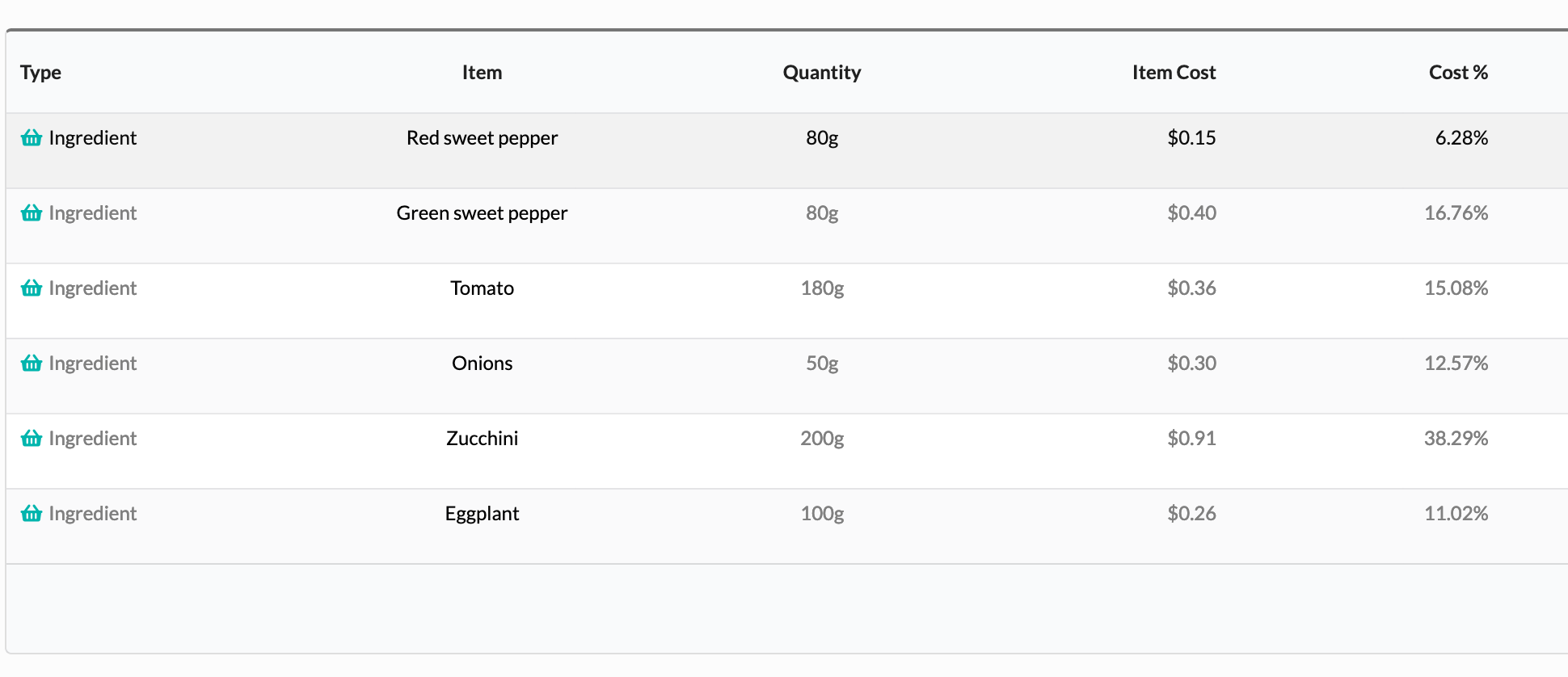
A chart allows you to see at a glance the impact of the ingredients on the final cost and adjust the recipe as needed to fit your expenses.
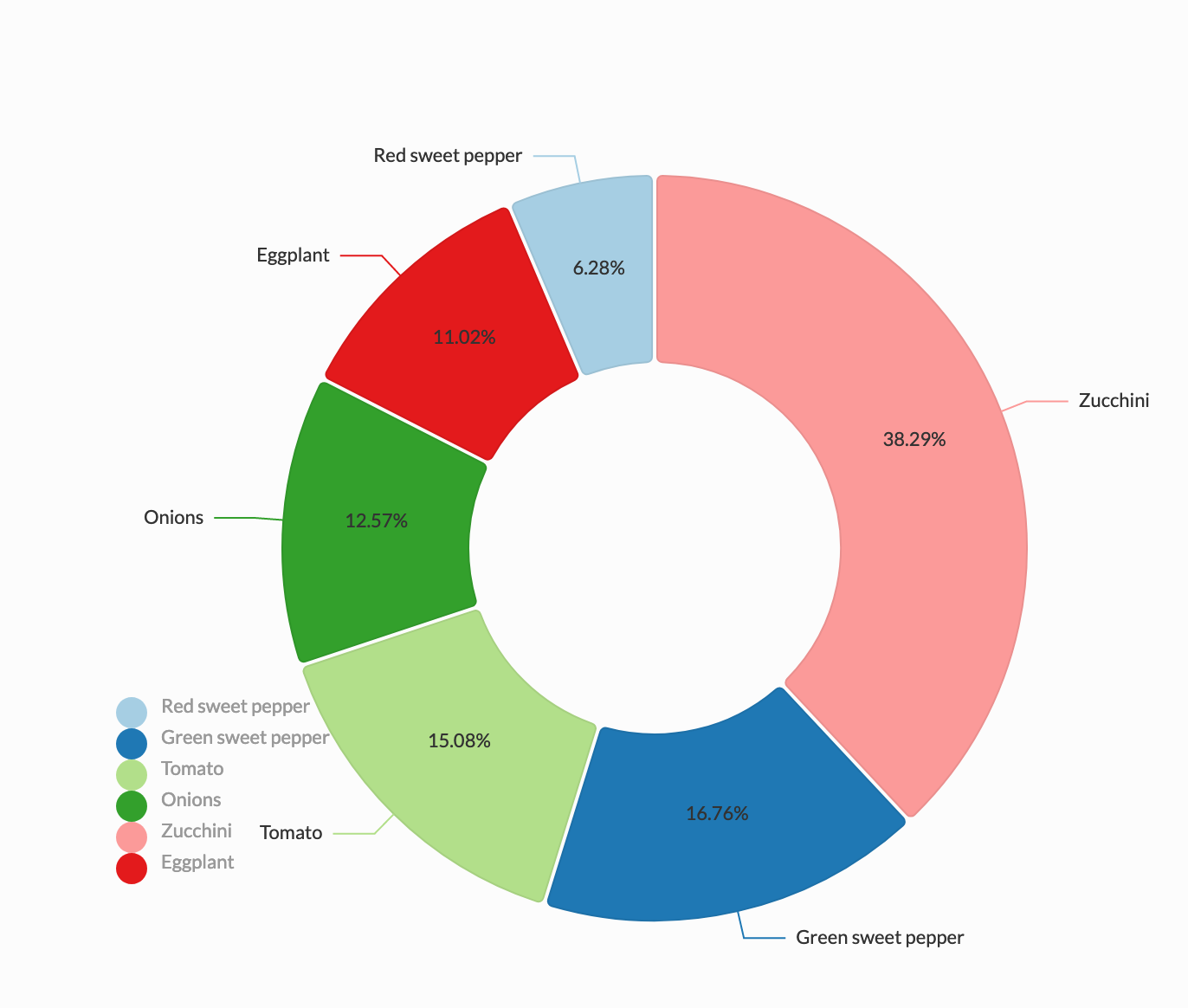
Recipe per ingredient cost chart in Ratatool
You also have
access to your financial margin indicators. Enter a target selling price and obtain for your recipe grosss margin,
markup rate or the food
cost percentage.
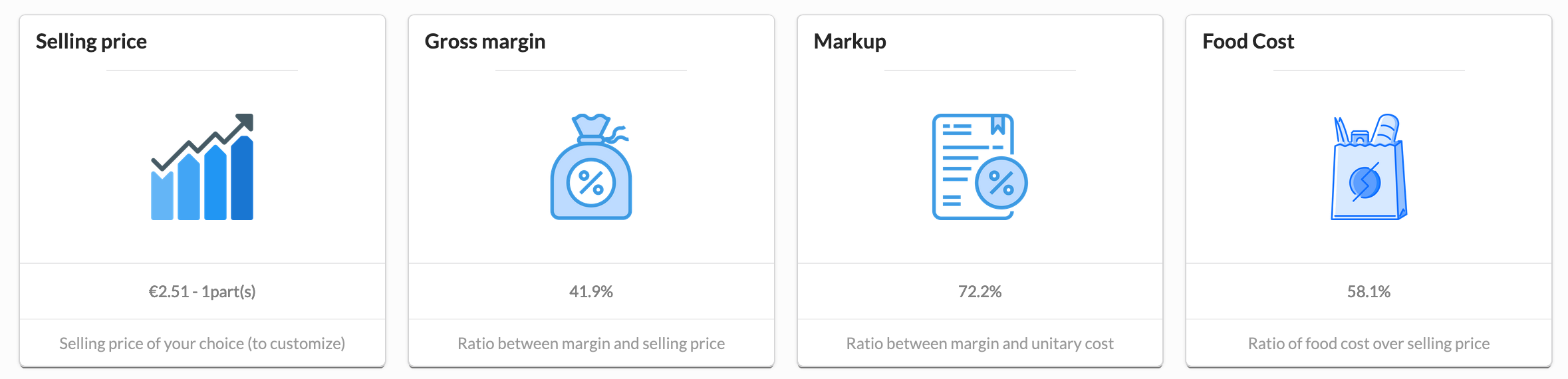
Margin
calculations
and
profitability
on
Ratatool
- Ratatool is an online tool that allows you to digitalize
your working documents (recipe technical forms) on a daily basis to save time, improve your productivity and let you focus on the
essentials. Your essential
documents such as menus, margin analysis, purchase orders are available online, exportable, printable at any
time (Pdf, Excel or Csv).
You can create a recipe database that data
belongs to you in a totally secure way.